
Home
Kardzali is a hotspot for Turkish and Greek tourists, but not Bulgarian. Why?!
- Details
- Written by: Martin Pramatarov
- Hits: 2449
Can you believe it? A Bulgarian city that is full of foreign tourists from Turkyie (Turkey) and Greece, but very few local tourists. Why is this happening? We went to Kardzali ourselves to find out. Is there something that keeps the local tourists away? Exploring all the places to visit in Kardzali, we made some very interesting discoveries. Find out what!
Where is Kardzali?
Kardzali (Кърджали), also spelled Kardzhali or Kurdzhali is a Bulgarian town located in the central part of South Bulgaria, next to the Arda River and Rodophe mountains.
When you look at the ma p of Bulgaria, locate Plovdiv, and from there go slightly southeast and you will see Kardzali.
If you a watching the map of Türkiye (Turkey), you will see Kardzali, west of Edirne.
And if you are checking the Greek map, you will find Kardzali, north of Komotini.
Some say that the name of the town comes from the Ottoman conqueror Kirca Ali, but Bulgarian historians say that is not true. The historian Boris Simeonov says that the name comes from the old Bulgarian language and the word “karchag”, meaning pottery. The place of the pottery makers.
| Follow PackAndGo.info at: | |
| YouTube | @packandgo. |
| @packandgo.info | |
| X | @packandgoinfo |
| @packandgo.info | |
| Bluesky | @packandgo.bsky.social |
| TikTok | @packandgo.info |
What to visit in Kardzali?
We were pleasantly surprised by the many interesting places to visit near Kardzali. You can spend a whole week around here, or even more if you are a lucky person with long holidays. Packandgo.info recommends you group some of the places to visit near Kardzhali per day.
For example:
Day 1: Utroba cave and the Devil’s Bridge.
Day 2: The stone wedding and Perperikon.
Day 3: River Arda and Tatul.
The Stone Wedding (Kamennata Svatba) (5 km way)
The stone wedding is a magnificent stone formation really close to Kardzhali. It is just around 5 km from Kardzhali. That makes it reachable not only by car but also by bicycle and even on foot. We usually don’t recommend taxis, but it could be a good option for a tourist group too.
We were quite lucky and there were no other tourists at the time of our visit. We could go around, take pictures from every angle, and even enjoy a small picnic there.
As we mentioned, Bulgarian tourists are staying away from Kardzhali and the foreigners don't know it.
The Stone Wedding has a legend:
A long time ago, there was a very beautiful woman. She was, so pretty, that everybody wanted her.
She fell in love with a brave man, and they were going to get married. The bride was ready and she was coming to the wedding together with all of her family and friends. At one moment, the wind blew her bridal veil and everybody saw her beautiful face. Because of her beauty, the men immediately desired her. That includes the father of the groom. God saw that and petrified everybody.
Back then, God was not merciful.
The Stone Wedding has a free entrance. You don’t need to pay anything.
The Mushroom Rocks (22km away)
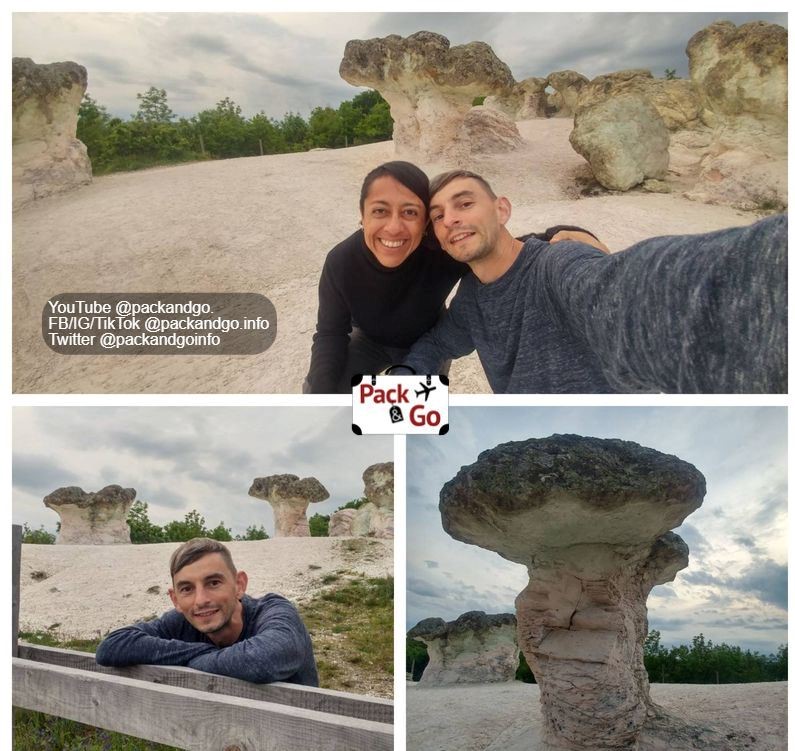
The Mushroom rocks, also known as the Stone Mushrooms or Kamennite Gubi are a great rock formation near the village of Beli Plast, between Kardzali and Haskovo. They are called Mushroom rocks because they truly look like mushrooms. The Mushroom Rocks are around 22km away from Kardzali and it takes around 30 minutes to reach it by car.
They were made from volcanic tuffs (learn about volcanos) and they have multiple colors like pink, blue, and some black dots thanks to the mineral cloinoptilolite, manganese, and mineral celadonite.
The Mushroom rocks are around 2.5 to 3 meters high, and there are a bit more than 10 rocks.
By the way, Haskovo is also worth visiting. Check it out here!
If you are into cool rock formations, you can also check Belogradchik, or Sliven, and its blue rocks.
There is no entrance fee for the Mushroom Rocks near Kardzali. They are free to visit and you can stop your car at the entrance.
Utroba Cave (Womb Cave) (23 km away)
Utroba Cave is a very good hiking route near Kardzali. It is around 23 km away from the town and it takes around 45 minutes by car or around 1 hour and 15 minutes on bicycle. You should go towards Nenkovo village, and just a bit after the hut Borovitsa, you will see the sign that shows the start of the trekking. There is a small parking for a few cars. The hike is marked with a yellow sign on the trees and if you follow it more, you can go all the way to the Paradise Viewpoint of Arda River. We only took the route until the Utroba cave, and it took around 1 hour.
It does not require any special preparation, but still, it is a good effort. The terrain changes. First, it is a forest, then it is rocky. We went during the late spring and we were quite sweaty when we got to the top.
On the route, there are no shops, but there are a few benches and even kiosks that you can use to make a picnic. We saw some families that carried meat for BBQ.
Let’s get to the interesting part. Why it is called Utroba? Utroba Cave means Womb cave. It is called the Womb Cave because it has a similar shape to the female genitalia. Its entrance is 3-meter high, 2.5-meter wide, and it is 22-meter deep.
The Thracians, who lived here thousands of years ago, worshiped the Mother Goddess. The Utroba Cave has such a location, that the sun's rays enlighten the cave at a certain moment during the day, and that represents the fertilization that the Sun God performs with the Mother Goddess in order for the world to exist and be reborn. The Thracians created an altar, and the best time to see this is during the winter, between December and February.
Even now, many tourists from Türkiye (Turkey), Greece, and Bulgaria come here, to ask Mother Goddess for fertility. They bring food and other gifts to the altar.
Utroba (Womb) cave has a free access. You don’t have to pay anything.
Perperikon (20 km away)
Perperikon also known as Perperek is one of the greatest Thracian sentuaries in the world. It is ancient. The first settlement here was built in around 6000 B.C.!
It is located very close to Kardzali, around 20 kilometers, so you can go there by car or by a tour bus from Kardzali, or another close town. There is a paid parking and a free one. Depending on the season, you might be able to find a place on the free one.
There is also a small entrance fee that you need to pay at the entrance.
Perperikon is on a hill, around 500 meters high and you can enjoy a very beautiful view from every side of Perperikon.
The name Perperikon comes from the Middle Ages, between the 11th and the 13th centuries. The first name was Hyperperakion, but it was shortened to Perperakion and later to Perperikon. The name comes from the golden mines of Rodophes, and the process of refining gold.
The first civilizations here date back to the Bronze Age, and there are many ceramics found here in the Early Iron Age. There is also an impressive 2-meter in diameter altar made out of rocks.
It is believed that Perperikon was the place of the most famous Temple of Dionysis during the classical era.
Now you can see the remaining multiple-story palace with a very impressive fortress, with tick walls and even a preserved defense tower, and a church from the 5th century.
While we were enjoying the sanctuary, we started talking with a few of the tourists. They were a group of Turkish people, who used to be Bulgarians. How come? There was a very rude process in Bulgaria in 1984 called the "Revival Process", in which the government pushed all the ethically Turkish people, who were born in Bulgaria to change their names from Turkish names to Bulgarian names or leave the country. Become 100% Bulgarian or go away. A very extremist approach. Those who didn't want to do it emigrated to Türkiye (Turkey).
So, these guys were one of the people who decided to move to the neighboring country. They came for the first time to Bulgaria, after many decades to see the attractions, but also their abandoned houses. They had many memories of the rocks since they lived in the village nearby. They had tears on their faces, and an anger, that no "Sorry" can erase.
So this region of Bulgaria has not only ancient history but modern too.
Tatul Thracian sanctuary (28 km)
Tatul entrance fee for adults costs 6 BGN.
Tatul entrance fee for children and pensiones costs 3 BGN.
Tatul is a Thracian sanctuary and it could potentially be the tomb of the mythical musician Orpheus. We can’t be sure if Orpheus even existed, but what the stories tell is that he was a Thracian from the Rhodope Mountains. And on the top of Tatul, there is clearly a tomb of a famous person, so we decided to believe the myth.
Greek tourists get easily annoyed when another of the neighboring countries tries to claim something from their mythology, but let’s not focus on who is wrong and who is right. The place looks magnificent and full of energy anyway.
What you will find in Tatul is a well-preserved Thracian sanctuary that is located on a 200-meter high hill, near the town of Momchilgrad. The Tracian settelment is from 4000 B.C., and it consist of a rock piramid with a sarcophag and multiple althars.
During the years and the multiple archeological works there, the workers have found multiple pottery, bronze items, valuable items, and more. What is truly unique are the items dedicated to the Sun cult. Back in the day, the gods were directly related to nature and the Sun was one of the most popular ones.
Harman Kaya (Harmankaya) 31.5 km
Harman Kaya is a huge Thracian sanctuary in the Rhodopes from around 5000 years B.C. It is located near the village of Bivolyane.
What is really interesting about is that it is all cut inside the rocks.
The whole complex was developed next to a small, 7-meter-deep cave. There is also another cave there and both look like wombs. Just like most of the other Thracian sanctuaries in the area, there are cut niches inside the rocks that serve as holders of different items during religious ceremonies.
There is also a tomb cut inside the rock.
The main attractions here are the two so-called Harmans which are big circles cut inside the rocks. One is around 10 meters and the other is around 15 meters. What archeologists think is that they were used for astrological purposes. It is really curious to think, how ancient people from all around the globe were looking at the night sky and were trying to understand the world.
Monyak fortress 11.5 km
Visiting Monyak fortress near Kardzali, around 5 km, and it is a great hiking destination. It takes around an hour to climb to the Monyak fortress, and you will pass through forest and a bit rocky track. What is incredibly nice is that you can see the Arda River from the top.
The fortress of Monyak is located on the top of the Sixth Fortress peak, which is 586 meters high. The fortress was built around the 12th-13th century and used to be one of the important fortifications of Middle Age Bulgaria. The fortification had high walls, some of which were as high as 7.8 meters high, and the length of the wall was around 300 meters.
During the Middle Ages, the Monyak Fortress was an impressive stronghold. Bulgaria was often in conflict with Byzantine and there were many attacks of nomadic tribes coming from the east. A century later, after many years of battles, the Ottomans came to Europe and conquered Bulgaria.
Sadly, the Monyak fortress is not very well preserved and it is slowly falling apart. It would be nice if the Ministry of Tourism of Bulgaria started taking care of it.
The Horseshoe Bend of the Arda River (Golemia Zavoi na reka Arda) 30 km
If you are near Kardzali you can enjoy the beautiful Arda river and its multiple viewpoints. One of the best of them is the Horseshoe Bend of the Arda River (Horseshoe on Kardzali Dam). There, the river Arda makes a U-turn and it looks like a horseshoe.
It is on the road between Kardzali and Ardino. You need to turn in the village of Kobilyane and go direction of Borovitsa.
It is a hotspot for nature photographers and even if you are not a professional, you can make some stunning pictures here. It is a very popular destination for Instagram pictures too.
Devil’s Bridge (Diavolski most) 42 km
The Devil’s Bridge is a very impressive old bridge from the 16th century, near the town of Ardino. A long time ago, there was a bridge that was a part of the Via Egnatia, an ancient Roman road that connected Thracia, Macedonia, and Illyricum and went all the way to the Aegean Sea.
This bridge was destroyed, but in the 16th century, Sultan Selim the first order to be rebuilt. So, the current design is thanks to the Ottomans, and it looks spectacular.
The Thracian sanctuary Eagle Rocks (Orlovi Skali) 34.6 km
The Thracian sanctuary Eagle Rocks is another interesting sightseeing spot near Ardino (3 km away). The site consists of multiple niches, maybe around 100 niches are cut into a really large rock that is located above the forest.
It had some religious meaning, but sadly it was so long ago that the current historians don’t know the story. What some archeologist guess is that the place date back to the 2nd millennium B.C. and it was used through the Antiquity.
Now it looks like a really romantic place. Imagine if you could put candles inside the niches. Coming here with your partner, think about coming to Orlovi Skali late, enjoy the sunset, and put some candles for a nice romantic evening.
Thracian tomb of Aleksandrovo (Aleksandrovska grobnitza) 63.4 km
As you can see, this zone is full of myth and legend. One of them says that here in the village of Aleksandro, you can find the grave of the famous Alexander the Great. Is it true? In this article, we are truly triggering the Greek people. Now with Alexander the Great hahahah.
Probably we will never know if this is really his tomb, but there is an amazing tomb from the 4th century B.C. with well-preserved frescos and that is a fact.
You can visit it both from Kardzali and Haskovo.
What to do in Kardzali?
There are plenty of things to do in Kardzali and its surroundings.
-
Visit the Regional Historical Museum in Kardzali. You will learn a lot about thousands of years of history. The region is one of the most interesting ones in the world.
-
Eat Bulgaria, Turkish, and Greek cuisine. Enjoy some dunners, pide, moussaka, filled paprikas, sarmi, or another delicious dish from this part of the world. Which is the best? Try the 3! We love all of them and they all have special preparation methods.
-
Drink Bulgarian wine and Bulgarian rakia. The whole region of Thracia is well-known for its excellent wine for more than thousands of years. The first evidence of winemaking near Kardzali dates back to 4000 B.C. and is connected to the Thracians. After that Greek and Bulgarian winemakers continued the tradition to the modern days. If you are not into wine, there is a stronger grape-made alcohol called rakia. It is the Bulgaria version of Brandy and it tastes delicious.
-
Climb the Rhodope mountains. The Rhodope Mountains, also known as Rodopi or Rhodopes are a mountain range in Southeastern Europe. The biggest part is in Bulgaria, but it also spreads to Greece. It is not the highest mountain in Bulgaria, but it is one of the most picturesque. You can climb the highest peak called Golyam Perelik, see Kardzhali Dam, and enter the Utroba cave or the Devil’s Throat cave.
-
Check historical sights and learn about the Thracians: Perperikon, Orlovi Skali, Harmankaya, Tatul, Utroba cave, Thracian tomb of Aleksandrovo, and more. If you are keen on Thracian history, what better place than the Thracian region itself?
-
Discover natural beauties like The stone wedding, the Mushroom rocks, and many more caves and waterfalls that you can find near Kardzhali.
-
Enjoy water activities in the Arda River. You can find multiple viewpoints, trek around, cross through the suspended bridges, and even rent a boat around the Arda River.
Go to one of the nearby towns. In the South of Bulgaria, there are many more interesting locations. Check out more villages, towns, and cities around.
So, why Bulgarian tourists don’t visit Kardzali and its surroundings?
Bulgarian tourists don’t visit Kardzali and its surroundings because it is not a trendy zone and they prefer to travel to closer places to the big cities. There is nothing wrong with the region and it has plenty of attractions near Kardzali to see. Sadly, it is not really close to the capital city Sofia, nor the big port cities like Varna and Burgas. Even Plovdiv is around 100 kilometers away.
Clearly Turkish and Greek tourists have discovered Kardzali and its surroundings and they have appreciated all the natural beauty and history of this region. If you are one of these tourists, that really enjoy this region, Packandgo.info has a message for you.
Please share this article with a Bulgarian! Show them how great the South of Bulgaria is. Tell them not to skip Kardzali on their way to the Greek beaches and spend at least a few days here. Yes, the Rhrodopes are not as high as Rila and Pirin, but they are also beautiful and full of interesting places.
What other Bulgarian cities can you visit from Karzali?
The top cities to visit from Kardzali:
-
Haskovo
-
Zlatograd
-
Smolyan
-
Pamporovo
-
Asenovgrad
-
Svilengrad
-
Plovdiv
-
Stara Zagora
-
Hisarya
-
Kazanluk
-
Sliven
The closest big cities are Plovdiv and Stara Zagora. Kardzhali is quite far away from the other big cities Sofia, Burgas, and Varna.
| Follow PackAndGo.info at: | |
| YouTube | @packandgo. |
| @packandgo.info | |
| X | @packandgoinfo |
| @packandgo.info | |
| Bluesky | @packandgo.bsky.social |
| TikTok | @packandgo.info |
Why do Turkish, Greek, and Bulgarian tourists love Haskovo?
- Details
- Written by: Martin Pramatarov
- Hits: 2303
At first glance, Haskovo is just a little town in south Bulgaria. What could possibly bring thousands of tourists from Turkiye (Turkey), Greece, and Bulgaria to this place? It turned out there are a lot of things to do in Haskovo!
Where is Haskovo?
Haskovo is located in south Bulgaria in the region of Thrace. You can go to Haskovo, in less than an hour, from the Turkish border and just under 2 hours from the Greek one. This is why it is really easy to visit Haskovo from Turkiye or Greece.
Ok, it’s is not far, but why should you visit it?
What to do in Haskovo?
There are many things to see in Haskovo. You can easily spend a weekend or even a full week in Haskovo and its surroundings, without getting bored.
Haskovo’s top attractions:
-
The monument of the Virgin Mary
-
Haskovo’s Bell Tower
-
San Stefano Street in Haskovo
-
The Monument of Envy
-
The Regional Historical Museum of Haskovo
-
Old Haskovo Clock Tower
-
1000 years Haskovo monument
-
Kenana Park
See the monument of the Virgin Mary (Monument of the Holy Mother of God)
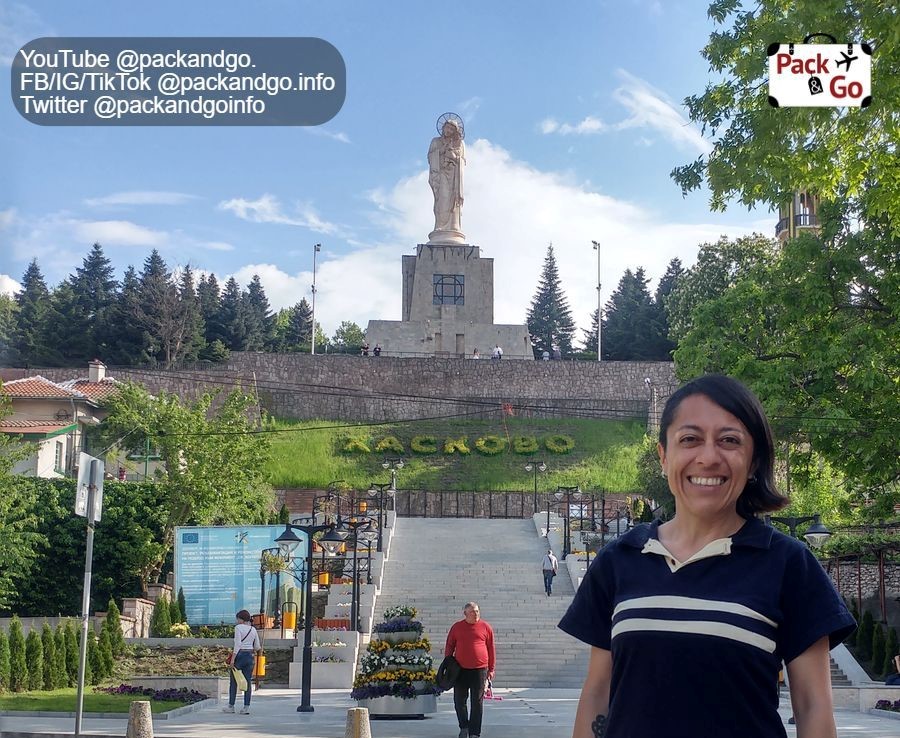
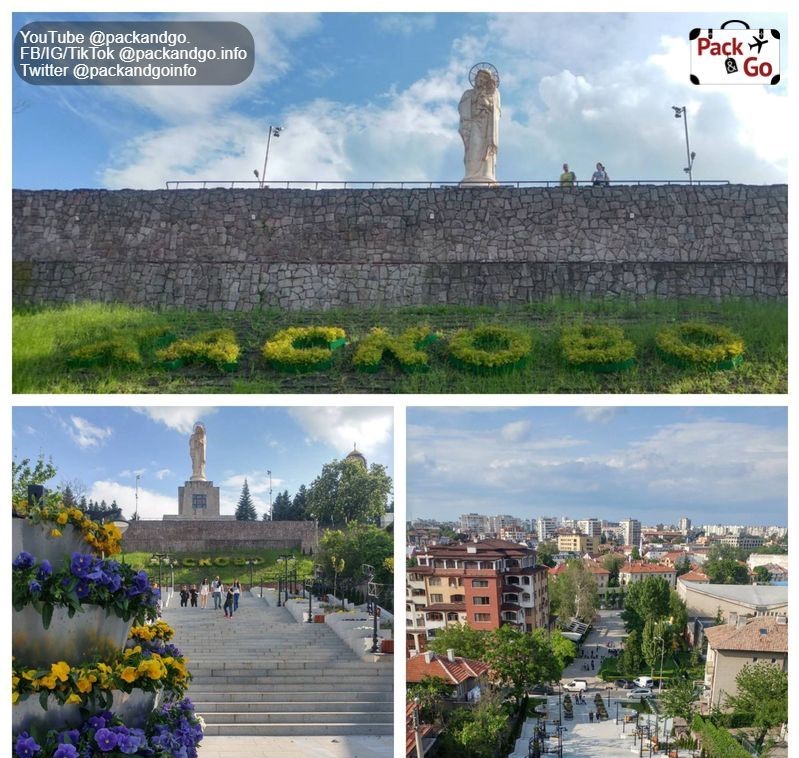
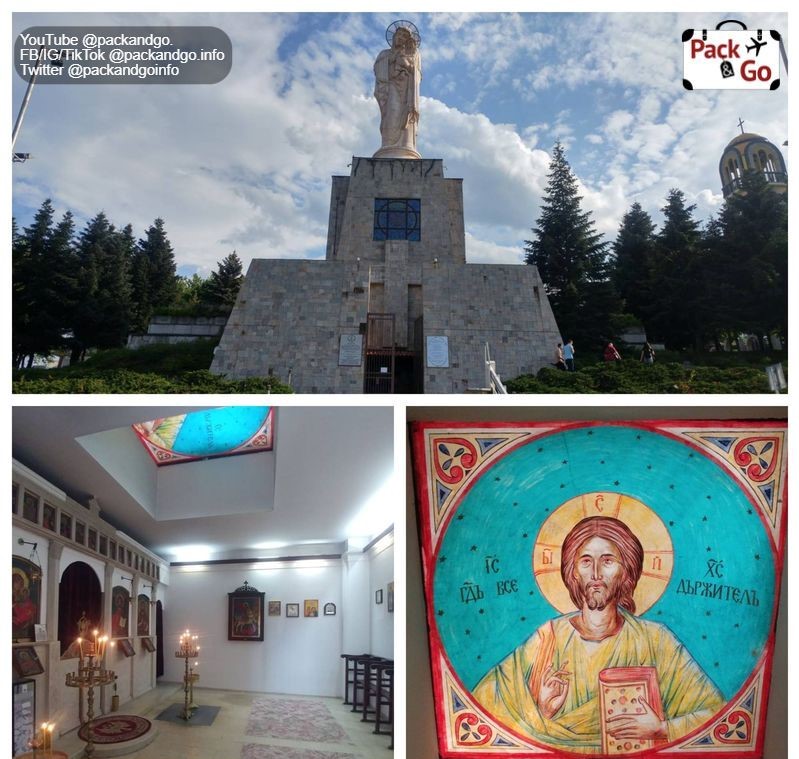
Haskovo’s statue of the Virgin Mary is so monumental that it holds the Guinness world record for the highest monument of the Virgin Mary in the world. It is 32.8 meters high! What is so great about it is that it is located on a hill, so when you climb on it, you can see the whole Haskovo city.
Inside the statue, there is a small chapel called “Nativity of the Blessed Virgin Mary”. Greek tourists like to put candles inside the chapel.
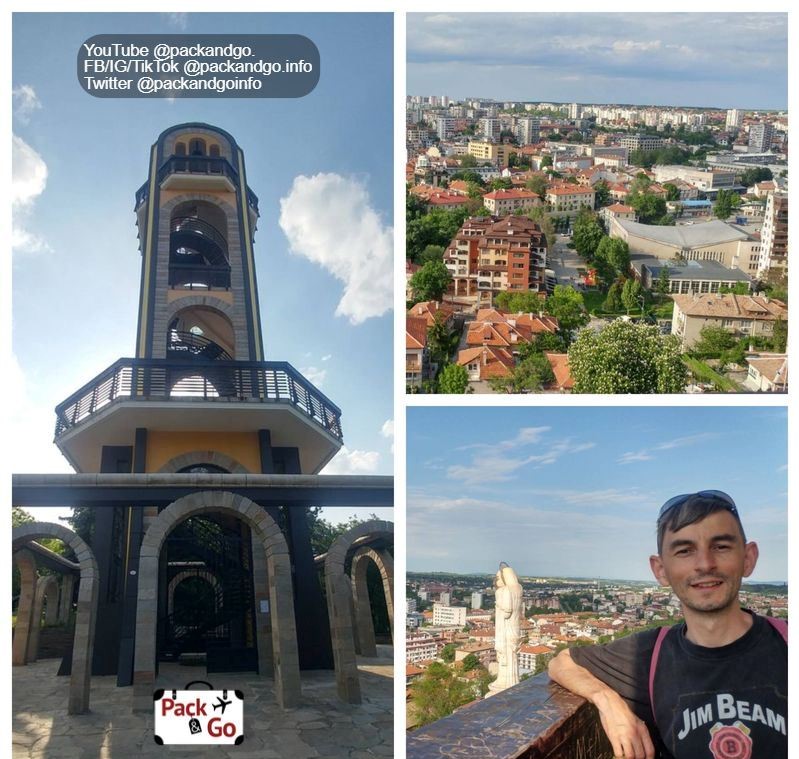
The Virgin Mary statue is located inside Yamacha Park. There you can spend the whole afternoon, having a nice picnic or just a walk. And just next to the monument of the Virgin Mary, there is the Bell Tower of Haskovo.
Climb Haskovo’s Bell Tower
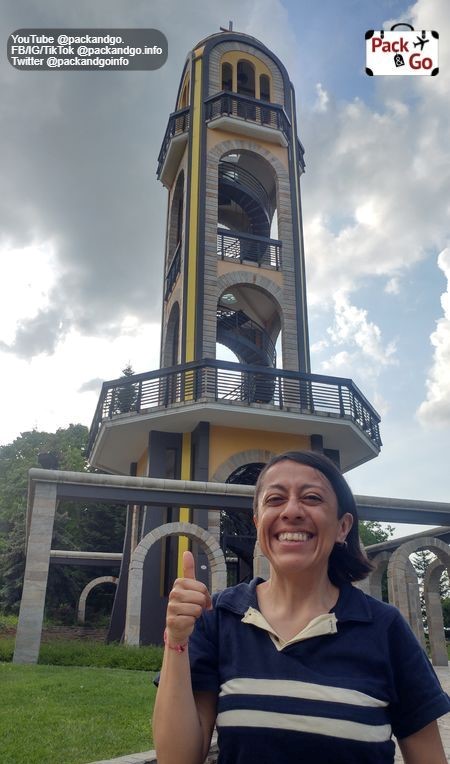
Inside Yamacha Park, just next to the Monument of the Holy Mother of God, you will find a beautiful Bell Tower. From the moment we saw it, we wanted to climb it. Of all the things to do in Haskovo, this one is a must. It has the best possible view of Haskovo. But there is a catch. Haskovo Bell Tower is a working clock tower. It rings the bells every hour, and there is nothing to stop you from climbing to the bells. Only a small sign in Bulgarian saying not to climb when it will ring. We arrived 10 minutes before the next ring. This pushed us to climb the tower in a hurry. We managed to do it and have a few photos from the top. Then it was a dash to the ground. Just as we sat on one bench below the Bell Tower started ringing. It has a powerful sound. I was glad we managed to get down on time or we could easily get deaf from the loud sound. Seriously, don’t stay up when it is ringing. It could be very harmful for your ears.
Walk on San Stefano Street towards the downtown of Haskovo
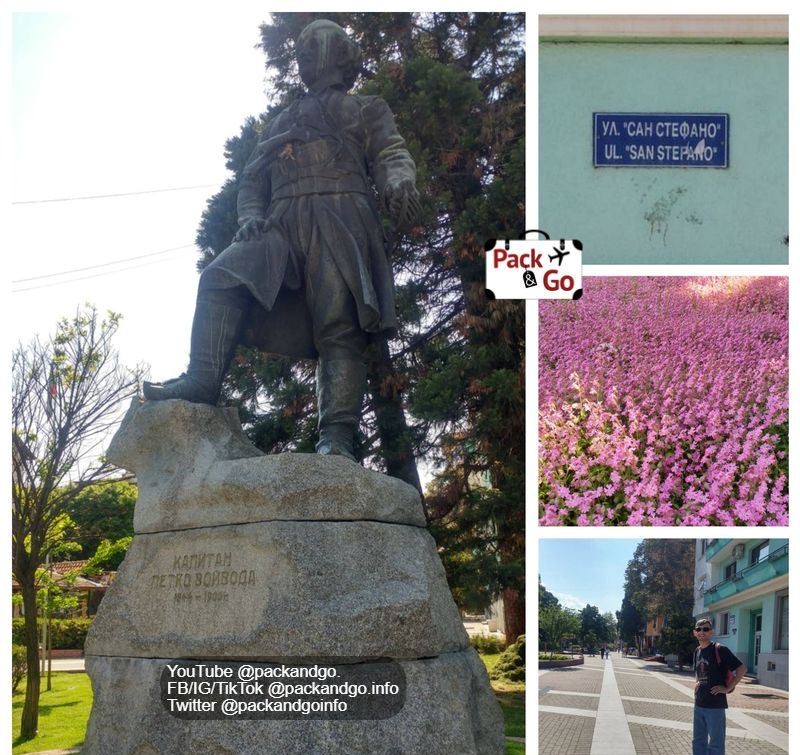
Start from the monument of Kapitan Petko Voyvoda and walk toward Obshtinski Square.
There you can find plenty of coffee places, restaurants, and fast food stands. We enjoyed a lot how lively this part of Haskovo was. You see people of all ages enjoying their time. If you are into Greek gyros or Turkish doner kebab, there are many options on the street.
The walk to the center of Haskovo is short, maybe around 10 minutes, but it is really pleasant. In the end, you will see the start of Obshtinski Square and the Monument of Envy.
Rest next to the Monument of Envy in Haskovo
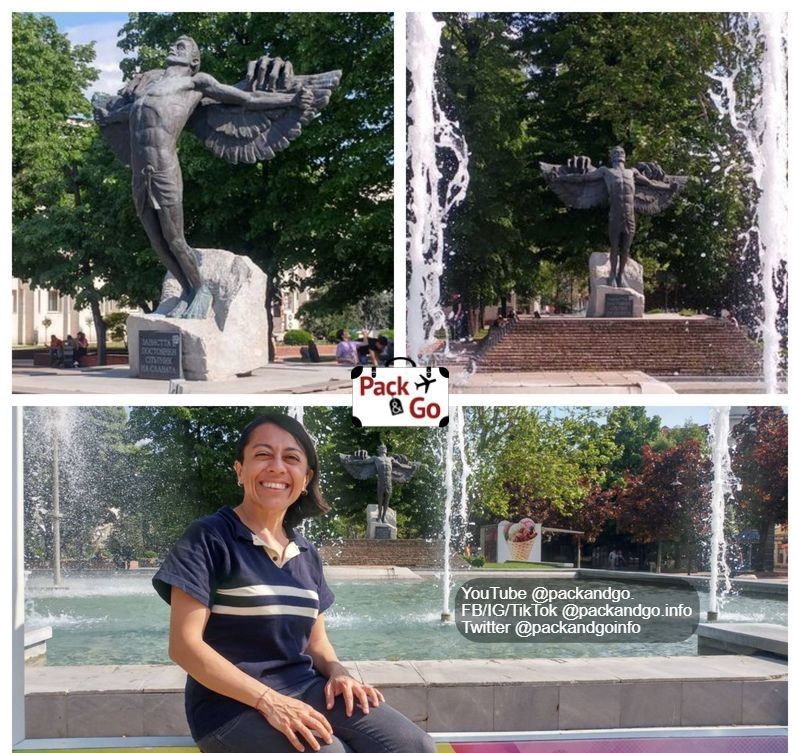
The people from Haskovo are really proud of this monument. They say it is the only monument of Envy in the whole world. We can’t guarantee that, but it is not common when somebody creates a monument of a negative feature.
The monument of Envy in Haskovo represents a successful man, that has spread his wings and he is ready to fly high. But there is an ugly, skeleton hand, that drags him down, in an attempt of stopping him. With his sculpture, the author Gospodin Tenev (Guspata), wanted to say that there will always be envious people trying to stop you. And actually, you should embrace it. When the “ugly” people start to bother you, you should know you are on the right path to greatness.
Why should you see it? Because it is truly inspirational. Don’t give up when envious people come into your life. Fly away and resist the negativeness.
We got an ice cream from Billa and had a nice break next to the statue. On a hot day, ice cream and the drops from the fountain were a great combination.
Visit the Regional Historical Museum of Haskovo
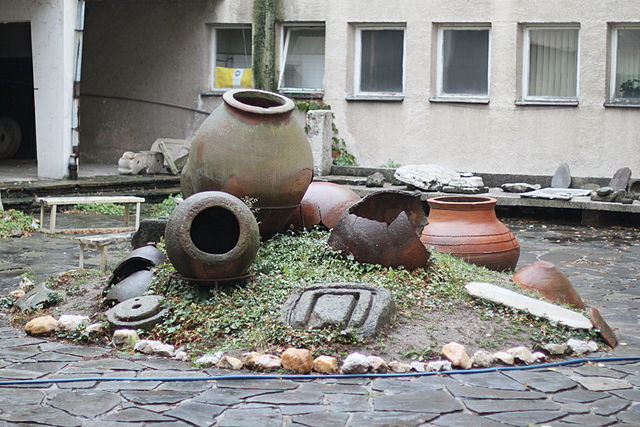
If you are into museums visit the Regional Historical Museum of Haskovo. Why? Bulgaria has a rich history dating back to the stone age. What is interesting about Haskovo’s history is that it is located in the geographical area of Thrace. You can find some truly ancient artefacts from the Neolithic age (between 8000 to 5000 years BC!). You can explore history through all the tools that are still well-preserved. Going from stones to primitive metal tools and finishing in the middle ages.
Greek, Turkish, and Bulgarian tourists can enjoy the Regional Historical Museum in Haskovo, and see how these countries and their cultures have been intertwined together for many ages.
The entrance costs 2 BGN (around 1 euro) for adults and half price, 1 BGN for children and pensioners. It is worth it.
Check out the Old Haskovo Clock Tower
In Haskovo, you don’t need a watch, you can see the time everywhere. The Old Clock Tower of Haskovo was built at the beginning of the 19th century and still shows the time, in the center of the city. It is a 23-meter high Clock Tower, with a recently updated mechanism and the bell, created by the same company that built the Big Ben bell in London.

Eat Bulgarian food
We can’t just walk all day without getting hungry! Enjoy some traditional Bulgarian food in Haskovo. Here, you can enjoy a great fusion between Bulgarian, Turkish, and Greek cousins. You will find Pide, Musaka, different kebabs, Lahmacun, Kiopoolu, Banitza, filled paprikas with minced meat and rice, sarma, and more. Just writing these incredible foods makes me hungry.
Of course, there are pizzas and burgers, just like anywhere in the world, but Haskovo has great local food too. Try it out! Broaden your culinary culture!
| Follow PackAndGo.info at: | |
| YouTube | @packandgo. |
| @packandgo.info | |
| X | @packandgoinfo |
| @packandgo.info | |
| Bluesky | @packandgo.bsky.social |
| TikTok | @packandgo.info |
Check out the 1000 years Haskovo monument
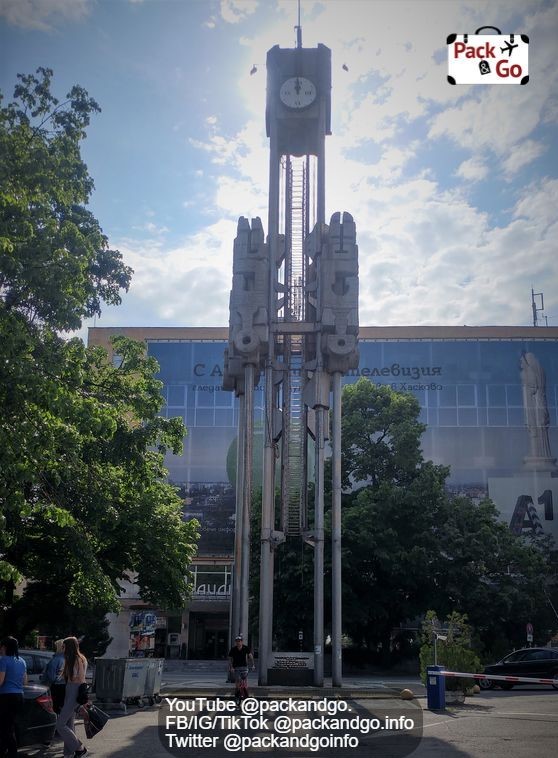
While you are in the center of Haskovo, take pictures of the 1000 years of Haskovo monument. Here in this city, people love clock towers, so you can enjoy one more. It is a high building, 26.5 meters and it has a very cool design. It looks heavy, industrial and somehow reminds me of the Transformers.
The idea of the monument was to show the 4 directions of the world and to represent that Haskovo is on the way between the East (Asia), and West (Europe).
Sadly, tourists can’t climb on it.
Park Kenana (Lesnopark Kenana) and Haskovo Zoo (Kenana Park Zoo)
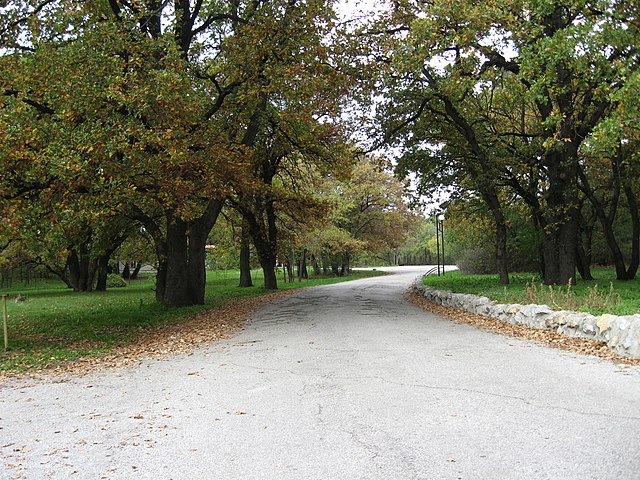
Do you fill like going into the forest? Lesopark Kenana gives you a great opportunity to do it. It is big and perfect for a walk with your family or pet. Kenana Park is both pet-friendly and kid-friendly. It is your escape from the city. It is located in the north part of Haskovo. You can easily arrive by car or public transport.
We saw many people that come to do their exercises here. Runners, cyclists, tennis players, yoga people and more.
In this forest environment, there is a small zoo too, the Kenana Park Zoo. With animals, typical for the Balkan forest like deer, rabbits, ducks, wolves, and more. The big exception is the lions. They look a bit out of place here, but the locals love them.
Bear in mind that there are no businesses inside the park. You need to prepare yourself with food and drinks.
What to visit near Haskovo?
There are a few truly interesting places you can visit near Haskovo. Some will help you discover more about the history of the region, and others, will just feel your heart with joy from the nature’s beauty.
Top attractions in Haskovo’s surroundings:
- Historical museum Dimitrovgrad
- Thracian tomb of Aleksandrovo
- The Stone Mushrooms
- Perperikon (Perperek)
Historical museum Dimitorvgrad - 14 km away
You should visit it because you can learn more about the socialist past of Bulgaria. “Brigadier Movement in Bulgaria" hall focuses exactly on this period. You will see old uniforms, flags, different signs, photos, and awards from the Brigadiers' past.
The entrance is just 2 BGN for adults and half price (1 BGN) for children and pensioners.
Alexandrovo Tomb (Thracian tomb of Aleksandrovo) – 16 km away
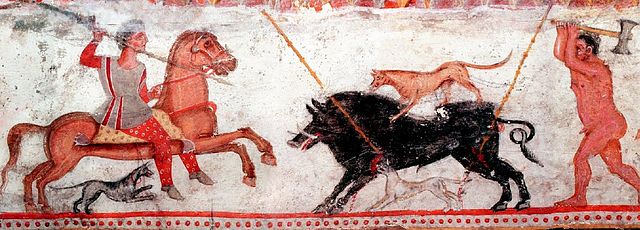
The Alexandrovo Tomb is an ancient Thracian tomb from the 4th century BC. The name of the ruler, resting in it remains a mystery. This is why some people speculate that it is the grave of Alexander the Great. He also died during the 4th century BC, and Macedonia is close. There are some chances this myth is true.
Even if the Tomb in Alexandrovo is not Alexander the Great’s tomb, you can still see some really unique artefacts like the Thracian frescos and amazing tomb architecture. A funny fact is that in one of the frescos, one participant in a hunt wears Greek sandals. This obviously shows how strong the Greek influence was in this region.
The Stone Mushrooms (Mushroom rocks) – 20 km away
The Stone Mushrooms is a unique rock phenomenon near the village of Beli Plast, between Haskovo and Kardzali. On our way to Kardzali, we stopped to check it out. The stones have a very extravagant form, that strongly resembles mushrooms. This is why they are called the Stone Mushrooms.
They are created from volcanic tuffs (learn about volcanos) rocks and have cool colors like pink (mineral cloinoptilolite), blue and black spots from manganese, and even green colors from the mineral celadonite.
Each stone mushroom is around 2.5 to 3 meters high, and there are more than several rocks around.
If you are into cool rock formations, you can also check Belogradchik, or Sliven, and its blue rocks.
There is no entrance fee for the Stone Mushrooms near Haskovo. They are free to visit.
Perperikon (Perperek) – 25 km away
Peperikon is another must-see landmark in Bulgaria. It is a Thracian holy place from 6 000 years BC! An ancient place! Currently, there are remains from the last middle age settlement there and a beautiful stone tower.
Thousands of tourists come to Perperikon, not only from Turkiye and Greece but also from all over the world.
Honestly, you can reach it from Haskovo easily, but it is just a bit closer to Kardzali. So if you want to know more about it, check out our Kadzali article (LINK).
Outro
So, what are you waiting for? You saw the pictures from Haskovo already.
If you are in Edirne, it is closer to come here than to go to Istanbul. It will be a whole new country with a different language and culture.
For Greeks, there are also many things to see in Haskovo. Greece is old, but Thrace has a lot of history too.
There are plenty of things to do in Haskovo. Just visit Haskovo already!
How to get to Haskovo?
From Turkey to Haskovo:
The distance between Edirne and Haskovo is just 100 km and it takes only hour and a half to get there. Check the navigation here.
The distance between Tekirdag and Haskovo is 250 km and it takes 3 hours to get there. Check the navigation here.
The distance between Istanbul and Haskovo is 345 km and it takes 4 hours to get there. Check the navigation here.
Turkish citizens must obtain a Bulgarian visa, before their trip. The process is not hard and it gives you the right to stay up to 90 days in Bulgaria. You can get a visa at the Bulgarian consulates or embassies in the following cities: Ankara, Bursa, Edirne, and Istanbul.
Check out how to get a Bulgarian visa here (LINK).
From Greece to Haskovo:
The distance between Komotini and Haskovo is just 118 km and it only takes 1 hour and 52 minutes to get there. Check the navigation here.
The distance between Alexandroupoli and Haskovo is 172 km and it takes 2 hours and a half to get there. Check the navigation here.
The distance between Kavala and Haskovo is 215 km and it takes 2 hours and 50 minutes to get there. Check the navigation here.
Greek people only need their ID cards or passports to cross.
For tourists within Bulgaria:
And of course, you can get easily get to Haskovo from different Bulgarian cities:
The distance between Kardzali and Haskovo is just 47 km and it takes only 45 minutes to get there. Check the navigation here
The distance between Stara Zagora and Haskovo is just 60 km and it takes only ah hour to get there. Check the navigation here
The distance between Plovdiv and Haskovo is 96.4 km and it takes 1 hour and 10 minutes to get there. Check the navigation here
The distance between Sliven and Haskovo is 136 km and it takes 1 hour and 40 minutes to get there. Check the navigation here!
| Follow PackAndGo.info at: | |
| YouTube | @packandgo. |
| @packandgo.info | |
| X | @packandgoinfo |
| @packandgo.info | |
| Bluesky | @packandgo.bsky.social |
| TikTok | @packandgo.info |
Everything you need to know about the Mexican Alebrijes
- Details
- Written by: Gianna Esquivel
- Hits: 2218
Guys, we have talked already about these beautiful Mexican fantasies called alebrijes. After publishing the article Alebrijes, meet these fantastic and colorful Mexican creatures! we receive many questions about them. So here you have the answers. We hope this can satisfy your curiosity and more importantly, that this gives you the last kick to Pack and Go to Mexico to meet these beautiful and exotic creatures in their homeland!

| Follow PackAndGo.info at: | |
| YouTube | @packandgo. |
| @packandgo.info | |
| @packandgoinfo | |
| @packandgo.info | |
| TikTok | @packandgo.info |
Are alebrijes from Mexico?
Yes, alebrijes are from Mexico. They were created by the Mexican handicraftsman, Pedro Linares López, who was born in Mexico City in 1906 and died in 1992 when he was 86 years old.
If you want to know more about the story behind the Mexican alebrijes, check Alebrijes, meet these fantastic and colorful Mexican creatures!
How many types of Mexican alebrijes are there?
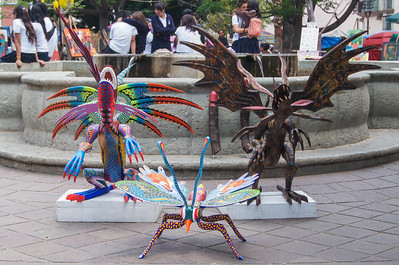
There are two types of Mexican alebrijes, the ones made of paper, through the technique known as papier-mâché sculpting used by his creator, Pedro Linares López in 1936.
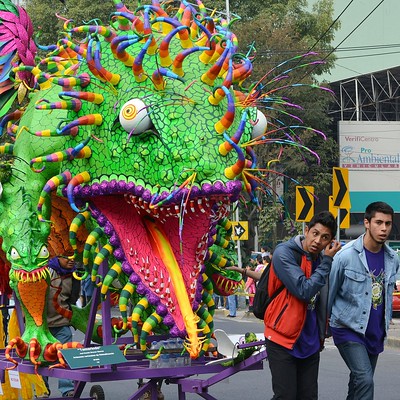
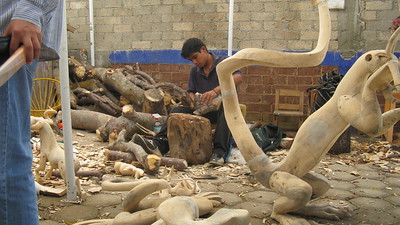
And the alebrijes sculpted in wood, like the Oaxaca ones made of copal wood instead of paper. Based on the Mexican region you are in, you can find more versions that use different types of wood.
What powers do alebrijes have?
Alebrijes don’t have supernatural powers. Let’s explain this, taking away the nahual myth. An alebrije combines different features from different animals in a single creature. Therefore, the powers alebrijes could represent, not really have, are useful animal abilities and instincts. If you give wings to a jaguar, besides being a great swimmer and climber, it will fly. If you add to it an elephant trunk, the jaguar will gain a powerful sense of smell to track whatever. Remember that alebrijes were created far from myths. It was a handicraftsman's creation and contribution to Mexican popular art.
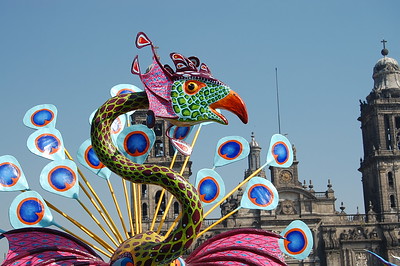
Now, if you look for an answer considering the nahual myth that has been connected with the alebrijes, the powers of nahuales -not of alebrijes- are said to be animal features. But the main difference here is that being connected with a human, those animals could take human shape and the human could transform on the animal. Just consider that the nahuales myth was taken as inspiration to create alebrijes in Oaxaca. But they are not the same thing. Most of the descriptions of nahuales describe them as beasts or normal animals.

Are alebrijes connected with the Day of the Dead?
No, alebrijes are not connected with the Day of the Death. Alebrijes were created by the Mexican Pedro Linares López in 1936. They were the result of his creator’s imagination.
But thinking about the version of alebrijes made in Oaxaca, their link with the nahual myth makes a connection with the Day of the Death.

In Oaxaca, it is believed that, whether in its guardian or evil version, a nahual can appear throughout the year. But during the Day of the Dead, the nahuales are more present because, on that day, the barrier that separates this world and that of the Dead (supernatural world) is erased for a few hours.
On the Day of the Dead, the nahuales coexist with the souls of those they protected in life and it is said, they are even visible to the living. Especially during the days around the Day of the Dead, people in Oaxaca are more careful and kind to animals. They think that these animals could be the nahuales of living or dead people.

What are alebrijes in Coco?
If you haven’t been yet to Mexico, pretty sure you already knew the alebrijes while watching the animated fantasy “Coco” (2017), of Disney.
Alebrijes were used by the creators of “Coco” like spirit guides of the main characters. Don’t forget it is fiction, therefore you shouldn’t take their version like it’s 100% historically accurate. But they used them in the film to include another native and visually attractive Mexican element. Alebrijes are exotic and very colorful and this turned out convenient to create the vibrant environment this Disney’s fantasy offers you.
In the movie, alebrijes are directly connected with the Day of the Death. But we already explained to you that there’s no such connection. The use of alebrijes in “Coco” is closer to the one explained by the nahual myth, popular in states like Oaxaca, about animal guardians of humans. And still, you will find inconsistencies with it because such guardians were normal animals, not alebrijes.
What does it mean to give an alebrije?
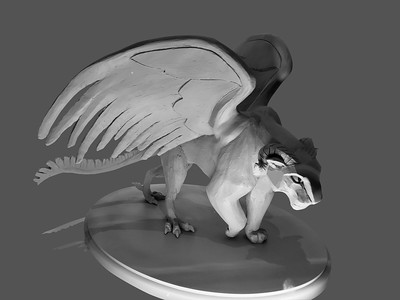
Giving an alebrije is a kind detail. Many people give alebrijes as souvenirs of their trip to Mexico. To add a colorful and beautiful detail to any room. For the believers of the myth of the nahual, giving an alebrije means a tool to drive away from a home an evil spirit. It is said that the more monstrous the alebrije looks, the more effective it will be against evil spirits. Some give them away as a symbol of good luck.
The meaning is more a personal attribution than something real.

Do alebrijes represent real animals?
Yes, alebrijes represent real animals, all kinds of them, but with emphasis on the ones that are more common in Mexico. Once the artisan combined the features of different animals in a single piece, the result is not a real but an imaginary animal.
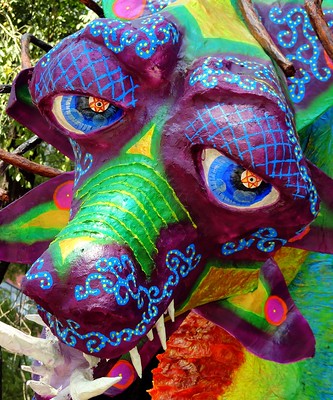
Sometimes, the first thought many tourists have when they see an alebrije for the first time is “they are dragons”. But they are not dragons. Maybe some get a bit that image due to the combination of animals, the addition of claws, wings, or horns.
What animals are alebrijes?
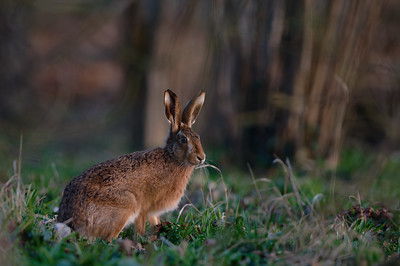
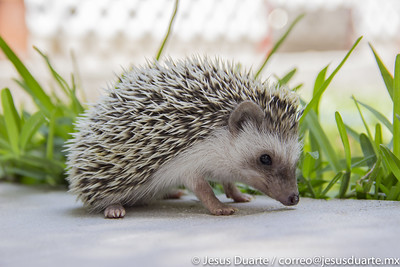
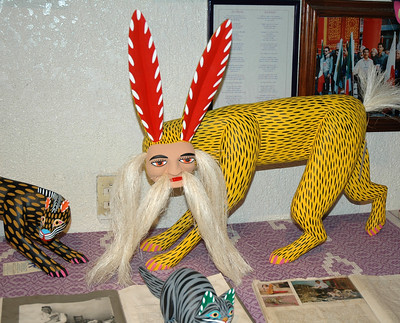
All animals are potential alebrijes (mice, snakes, jaguars, lions, hedgehogs, monkeys, foxes, scorpions, rabbits, and so on). Handicraftsmen use a wide variety of animals and combinations of them. But usually, they recreate the more popular or known animals of their regions.
What are alebrijes made of?
The most popular and traditional alebrijes are made of paper, through the technique known as papier-mâché sculpting. Or sculpted in wood, like the ones made in Oaxaca with copal wood.

But there are alebrijes made of clay, different types of wood, some artists have painted alebrijes. And I have to say that recently I have seen very cheap versions of alebrijes made of plastic by China.
Are all alebrijes the same?
Not at all. Alebrijes are not all the same. Since there’s no standard pattern or matrix to make them, every alebrije is unique and unrepeatable. They (their size, colors, combination of animals, material, etc.) are the result of every creator’s creativity and skills. That gives great value to these pieces. It’s not strange people want to collect them.

How to paint an alebrije?
To paint an alebrije there are no specific rules, just get creative! Every alebrije combines the features of different animals. Talking about such combinations and colors the limit is your imagination. I will create a couple of examples: an eagle-headed lion with wings, a snake-headed leopard with a peacock tail. You can paint them blue, pink, purple, green, black, yellow, brown, etc.
Handcrafting your alebrije could be a nice activity for adults and kids. You should try it!
Where can I buy alebrijes?
You can buy alebrijes in Mexico. There are many souvenirs shops, craft markets, and art galleries where you can find all sizes, animal combinations, and quality alebrijes. You can also try online shops but there’s a chance the products are not Mexican.
And as we just said, you can create yours!
Share your experiences with us:
| Follow PackAndGo.info at: | |
| YouTube | @packandgo. |
| @packandgo.info | |
| @packandgoinfo | |
| @packandgo.info | |
| TikTok | @packandgo.info |
If you haven’t tried mezcal, you haven’t lived
- Details
- Written by: Gianna Esquivel
- Hits: 2053
If you haven’t had mezcal yet, that is what Mexicans and mezcal enthusiasts will tell you. “If you haven’t tried mezcal, you haven’t lived”. I can’t be objective here. I totally agree with them. Mezcal is a delicious beverage. Once my palate tried its smoked notes, it got in love with them. For me, there’s no way back! I want mezcal in my life.
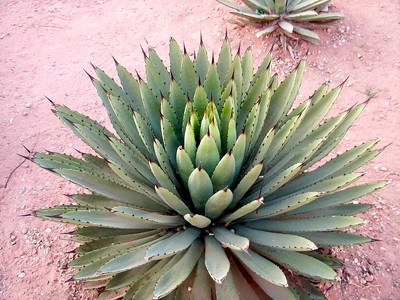
Mezcal is a Mexican agave spirit that has existed for centuries but now has become more popular. There’s no doubt, agave is a very generous plant. It is the source of really delicious alcoholic beverages that are icons of Mexican culture. Tequila (What is tequila?) is very well known around the world and mezcal has arguments enough to convince and get your palate and heart!
Let’s explore the origin, features, and more aspects that can make you crave a delicious mezcal.

What is Mexican mezcal?
Mexican mezcal is a popular spirit distilled from agave. It is a beverage with a specific smell and flavor, colorless or slightly yellowish when it’s rested, aged, or when it’s abocado.
Abocado refers to the addition of one or more natural products, flavorings, or colorings allowed in the corresponding legal provisions to soften its flavor, without resting it or aging it.
How does mezcal is produced?
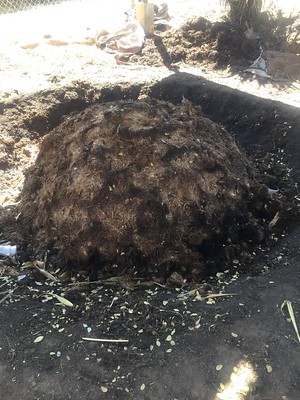
There are different ways to produced mezcal. Talking about the traditional (artisanal) process, in general terms, it involves rough and roasting the agave leaves. Once the heads or pineapples (pencas) are cleaned, they get grinded.
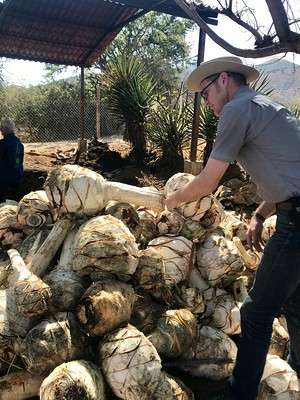
Agave hearts get cooked in pits in the ground then grinded to extract their juice. Then the liquid goes to fermentation and gets distilled twice in copper stills* or clay pots.
* An alchemical still or alembic is made of two vessels connected by a tube. It’s used for liquid distillation.
Tequila is produced in a similar way, see the difference here.
Is mezcal Mexican? - Mezcal origin
Yes, mezcal is an ancient Mexican spirit. According to some studies carried out by anthropologists from UNAM (Universidad Nacional Autónoma de México), this agave beverage was distilled by Mexicans in clay pots since 400 BC.
Later, the Spanish conquerors brought with them the distillation process (16th century). They realized Mexicans produced alcoholic beverages from agave and try it, but using their distillation process. If you consider the wide meaning of mezcal, every spirit distilled from agave, then the first mezcal got produced.
| Follow PackAndGo.info at: | |
| YouTube | @packandgo. |
| @packandgo.info | |
| X | @packandgoinfo |
| Bluesky | @packandgo.bsky.social |
| @packandgo.info | |
| TikTok | @packandgo.info |
The homemade production of mezcal is ancient in Mexico, but it became more important until the Mexican Revolution (1910-1920). However, its growth was very slow. As an industry, it started in the 18th century, when the distillation process got well known and popular in Mexico. The production of mezcal in an artisanal way was illegal, so everything was made clandestinely. The creation of the official Mexican standard and the appellation of origin (1994) were important steps to safely promote mezcal nationally and internationally.

Learn more interesting facts about mezcal here!
You can also check FAQ about tequila.
Are there different types of mezcal in Mexico?
Yes, there are different types of mezcal in Mexico. Types are defined by factors like the specific variety of agave used for its production, its aging time, production process, and what the Mexican Official Standard (NOM) says.
Based on the chosen agave to produce mezcal, the taste and smell you get. Tobalá, espadín and madrecuixe are three popular agave varieties used to produce mezcal.
Considering the aging process, there are three types of mezcal: young, aged, and extra-aged.
- Young mezcal is obtained directly from the distillation process. It’s light yellow color.
- Aged mezcal is stored in white oak or common oak barrels for at least two months. As a result, it gets a golden yellow color.
- Extra-aged mezcal has a maturation process of a year as a minimum. It gets an ocher brown color.
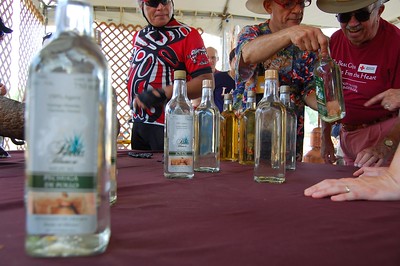
Based on its production process there’s minero (traditional), pechuga (breast), and abocado.
- Minero is the traditional mezcal. Its production follows an artisanal process that doesn’t involve electronic devices.
- Pechuga (breast) is produced following an ancient recipe from the Mexican state of Oaxaca. It involves a third distillation process in which a chicken, turkey, or rabbit breast is used to add smoky notes. The breast is hung inside the copper still so that the distillation steam comes into contact with it. That hot steam cooks the breast until it disintegrates. There are many recipes. Before the third distillation, other ingredients such as mole, tamarind, lemon, almond, walnut, guava, and more can be added.
- Abocado. It’s a type of mezcal that gets softened through the addition of natural ingredients like seeds, flowers, or maguey worms. Yes, the popular mezcal worms!
The Mexican Official Standard, NOM, establishes two mezcal types, pure and not pure. In the pure mezcal, 100% of the carbohydrates come from agave distillate. Not pure mezcal contains 80% agave carbohydrates and 20% carbohydrates from other substances allowed by the same organization.
What does mezcal taste like?
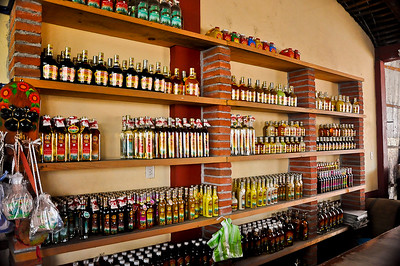
Mezcal tastes like heaven! Ok, let’s answer objectively. Mezcal taste varies based on the agave that is used to produce the mezcal, its production process, and its aging time.
Mezcal’s most famous signature is its smoky taste. Those notes and their depth are the results of the way the agave is cooked (in pits in the ground). And smokiness can be emphasized through processes like the third distillation pechuga (breast) type adds to the mezcal production.
But mezcal flavor is not only smoky. It feels smooth and It can be earthy, sweet, fruity, or floral too.
Its flavor is smooth, finely oiled this combines with a specific and very pleasant aroma. In its aromas, very nice ingredients can be also present. Cocoa, light smoke, orange blossom, ripe fruit, etc.
What is the best way to drink mezcal? - How to drink mezcal in Mexico?
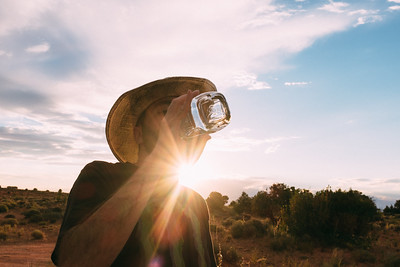
Mezcal flavor is a combination of nice elements. The objective is to give time to your mouth and palate to enjoy every one of its notes. Based on this, what Mexican bartenders recommend to drink mezcal is to slowly kiss it. Meaning you should drink it in small sips. That's considered the best way to drink it. Besides you can accompany it with some sips of water just to hydrate and clean your palate, for it to be ready to completely enjoy the next sip of mezcal, together with all its rich and tasty notes and aromas.
If you are into cocktails, these are the 5 best mezcal cocktails you can get.

Does mezcal go with chocolate?
Yes, mezcal goes with chocolate and life! Ok, again let’s answer objectively. Mezcal indeed combines well with chocolate. Experts on food pairing strongly recommend drinking mezcal while enjoying small pieces of chocolate, like truffles, tamarind, and sweets, like mazapán. They assure this combination produces tasty explosions in your palate. Just do it in proper order. First a sip of mezcal, after the chocolate or sweet.
You can also add a bit of mezcal to a cup of hot chocolate. This is a warm choice for Winter.

Conclusion
Mezcal offers to your palate a very sexy taste and experience. Mezcal is a tradition, a delicious sip of Mexico, variety of tastes and aromas. Mezcal is a temptation we recommend you not to resist. Remember, if you haven't had mezcal, you haven't lived!
Share your experience with us:
| Follow PackAndGo.info at: | |
| YouTube | @packandgo. |
| @packandgo.info | |
| X | @packandgoinfo |
| Bluesky | @packandgo.bsky.social |
| @packandgo.info | |
| TikTok | @packandgo.info |
Page 3 of 6